My use case is pretty much having a normal, usable, standard desktop environment where I can do workflows supported by features such as:
- using a screen recording program to, ya know, record the screen;
- …without having to buy more into the so-called portals cartel (that is also adding age verification);
- opening programs with their windows being opened in the workspace, screen and at least approximate positioning where I last used then;
- being able to drag-and-drop or relocate windows across screens, workspaces or any such entities;
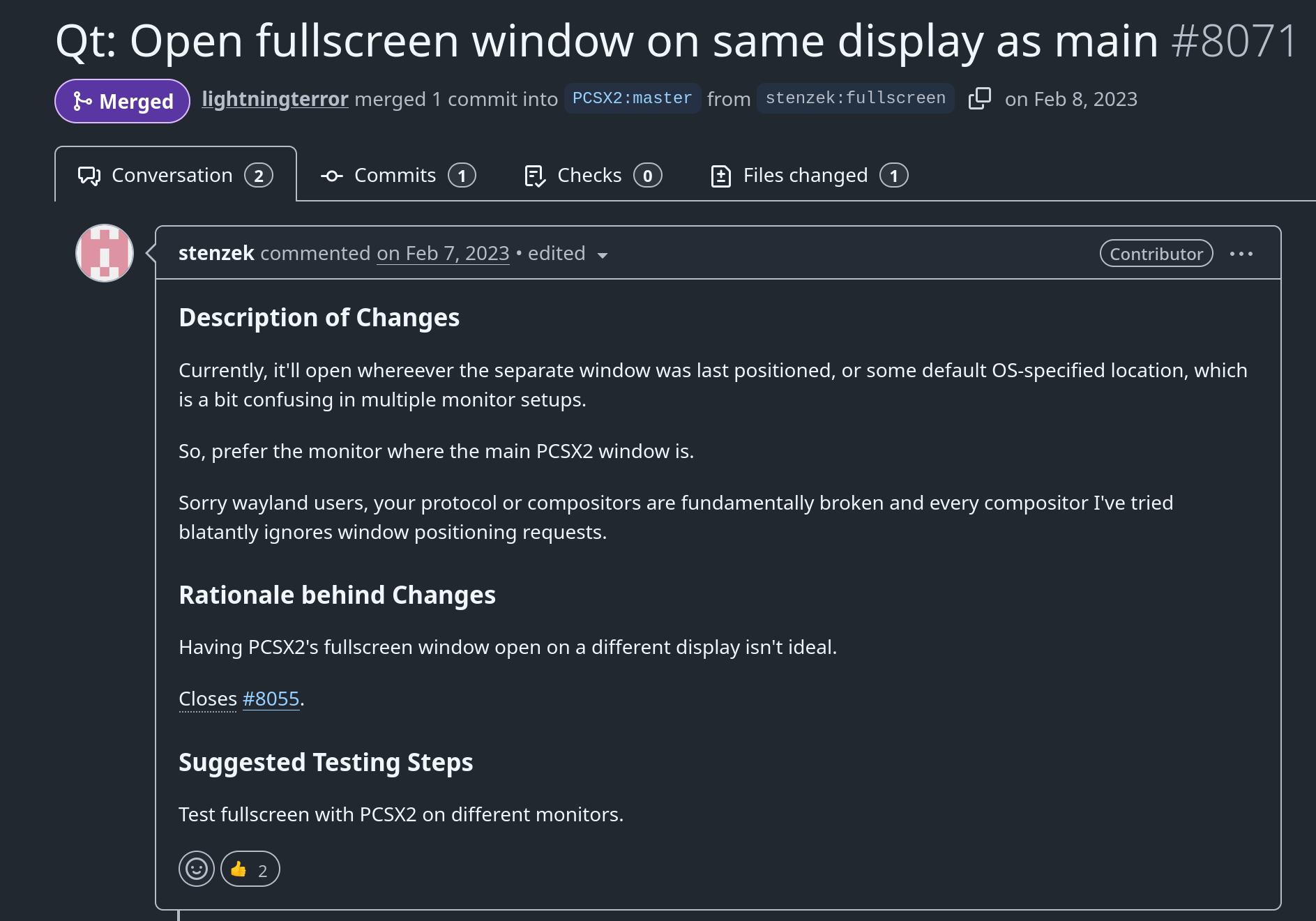
- launch graphical applications as a different user and have them interact natively with the rest of the desktop (eg.: fullscreen correctly);
- have a fucking clipboard!;
- with the Linux-classic middle-click alternate clipboard, too.
- assign a hotkey or keycombo for an application, that can be fired from anywhere else in the desktop;
- being able to manufacture input events for keyboard, mouse, joystick etc… for when there are issues;
- being able to launch the window of a program opened remotely;
- programs using the graphical theme I’ve assigned for window decoration, instead of inventing their own titlebars and min/maximize buttons;
- being able to drag-and-drop files from one window to another;
- and many others.
The last time I tried Wayland was in 2023-ish. The fucking thing could not even finish the startup for a desktop session in my machine. It’s honestly the worst vaporware I’ve ever seen, and I’ve been around since the ‘90s. I feel like these things will never ever be truly fixed, because from what I understand of the Wayland model, it is intrinsically about treating the user as an enemy:
“We’re treated like hostile threat actors on our own workstations” [1]
[1] https://gist.github.com/probonopd/9feb7c20257af5dd915e3a9f2d1f2277
Which is, ultimately, worrying. Things like Pulseaudio, systemd, Wayland, …, feel like they are making Linux less for the user and more for corporations. It’s enshittification, and comes from a culture of enshittification (Potter-ing etc).